

-
Workers’ Voice newspaper: March-April edition

The U.S.-Israel war on Iran is a major escalation in the Middle East that has dangerous implications for working people everywhere. The brutality of the imperialist assault internationally is paired with the attack on civil liberties by the Trump regime inside the U.S. This includes the continued operations of ICE and Border Patrol, the threats to the 2026 mid-term elections, environmental rollbacks that deeply impact the Black community, and unchecked police brutality.
Our editorial in this issue warns us: “There is a great danger of underestimating the determination of the U.S. corporate elite to drive through this effort. We cannot rely on court rulings or upcoming elections to save us. We must organize now, not only for mass demonstrations and community networks against ICE violence, but to find our way to building a new working-class party through which we can organize our political defense on every plane and on every day.”
In this issue we also have articles on the Epstein files and the ruling class, the San Francisco teachers’ strike, and a review of the new album by U2.
The March–April 2026 edition of our newspaper is available in print and online as a pdf. Read the latest issue of our newspaper today with a free pdf download! As always, we appreciate any donations to help with the cost of printing.
Click on the image to read the paper or message us to get a hard copy:

-
Strengthen the protests in the streets!


By CHRISTINE MARIE
In a startlingly short amount of time, the Trump-Musk presidency has made good on its promise to begin to dismantle the elements of the state that they consider superfluous to private profit and imperialist expansion. That has turned out to be almost any government service that working people have wrested from the elites to try to stabilize their standard of living and sense of wellbeing.
In short order, the new administration has used cabinet and agency head appointments, illegal executive orders, racist and sexist demotions and firings—as well as the deceitful DOGE operation, which is unleashing hackers on government servers—to gut spending and activity in support of health, education, climate mitigation, childcare, elder care, reproductive justice, basic scientific research, and the implementation of more than a century and a half of hard-won civil rights measures.
Along the way, they are attempting to tear up labor contracts, disperse workforces funded by federal dollars, and terrorize the already vulnerable immigrant workforce with sensationalized deportations.
As might have been anticipated, there is reason to believe that neither Congress nor the courts can be counted on to erect significant obstacles to Trump’s growing assertion of executive power. And just in case they do, Defense Secretary Hegseth has helpfully culled the Pentagon of generals who might be expected to oppose the deployment of U.S. troops on American soil or in an invasion of Greenland or Panama.
Given this frightening situation, the movement to obstruct the drive toward authoritarianism is growing. Tens of thousands of people have come together in protests from one end of the country to another, at town halls and in town centers, outside federal agencies, at the offices of Congress members, and at Tesla dealerships—making it clear that they are ready to fight. Their signs oppose Trump’s attacks on democratic rights, LGBTQI rights, and the unions. They oppose billionaire rule.
The majority of these actions have been organized by liberal formations, such as Indivisible, long operating inside a larger Democratic Party milieu. They have gained a broad reach into one section of the population that appears eager to demonstrate and express dissent.
At the same time, those who are most victimized have been organizing themselves. Immigrant working people have displayed their courage in street marches and through rapid response networks that have successfully impeded ICE raids. Recently, a number of protests have taken place defending the rights of Palestine solidarity activist Mahmoud Khalil and other foreign-born political dissidents against deportation. There has also been an upswing in the number of actions in defense of trans people’s right to health care and full participation in public life. Federal workers of all types have protested outside their workplaces in Washington, DC, waving union signs and placards defending their work.
As more and more working people absorb the reality of the Trump-sanctioned federal budget plan, a plan sure to include some $880 billion in cuts to Medicaid, theft from Social Security funds, an increase in war spending, and massive tax cuts for the rich, there is the potential to build demonstrations in more areas and with a greater size.
These protests have the ability to significantly expand the breadth of the population who become involved, while at the same time, augmenting the number of working people drawn into action. Accomplishing this usually requires organizers to meet in person and to plan deliberate outreach. Today, that could include labor militants eager to try to win the participation of their union locals, youth schooled in Palestine solidarity work, faith groups rooted in social justice activism, climate and Indigenous activists, and neighborhood organizations rooted in the Black community.
Efforts to broaden the protests could be firmed up with open, inclusive, democratically-run meetings. Each new meeting could bring in previously unorganized people and provide the space for those newly radicalizing to assume leadership roles.
This pattern, creating new open and democratic spaces rather than utilizing already existing formations associated with electoral politics, is important for another reason: Millions and millions of those who will want to protest have been deeply disappointed with both the Democratic and Republican parties and they have been disappointed for a very long time. They are going to be wary of organizations that they fear view them mainly as a vote in the mid-term elections. They will want to shape the politics of the movement.
It is reasonable to expect that working people who are inspired to act in response to the federal budget fiasco will want future demonstrations to clearly speak to their most immediate needs for an adequate income and for affordable housing—needs often summed up in the perennial slogan “money for human needs, not war.”
This kind of organizing can exponentially increase our capacity to fight back, building toward a moment when the opposition to the Trump-Musk drive toward authoritarianism can convincingly be seen by our worried neighbors and coworkers as the place for them. Nothing less is needed to rout the billionaires and preserve political space in which radicalizing working people can organize for even more fundamental social change.
History shows that in order to rout the far right, much more must be accomplished than simply increasing the size of the protest movement. It is also necessary for the movement to build deep roots among the working class. When big business politicians see protests whose marchers and leaders work every day to keep the lights on, the store shelves full, the trucks and trains moving, and the army marching, they worry about their ability to retain their class rule. To the degree that working people and their unions and community organizations take a major role in the movement, expressing solidarity with all oppressed people while raising their own demands, the movement will gain leverage to force concessions from the ruling class.
A mass movement can be built to force a retreat by the far-right politicians, the billionaire corporate heads, and others in the capitalist class whose policies are leading us to catastrophe. If you are interested in studying the history of our past victories and defeats in the battle against authoritarianism and capitalism and working to apply those lessons, consider joining Workers’ Voice.
Photo: Over 1000 march in St. Louis on Feb. 1 to protest President Trump’s mass deportation plans. (Bill Muñoz / St. Louis Public Radio)
-
Pro-Palestine activist Michael Pröbsting sentenced for ‘supporting terrorism’


The pro-Palestine solidarity activist Michael Pröbsting, who is also the International Secretary of the Revolutionary Communist International Tendency (RCIT), has gotten a suspended sentence of six months in prison at a trial in Vienna, Austria. He was charged with “approval and incitement to commit terrorist offenses.”
After Oct. 7, 2023, several pro-Israel forces in Austria have laid a criminal complaint against Michael, based on “suspicion of incitement to commit terrorist offenses and approval of terrorist offenses in accordance with Paragraph 282a, Section 2 of the Criminal Code.”
The reason for the criminal complaint was a paragraph in the RCIT’s statement which was issued on Oct. 7, 2023, and which had been distributed as a leaflet in German and Arabic language at demonstrations in Vienna: “The RCIT reiterates that as long as the Zionist state exists, the Palestinians will continue suffering from state terrorism! This is why we stand for the socialist perspective of a democratic and red Palestine. We support the struggle for the destruction of the Zionist state and the right to return for all Palestinian refugees” (“This is the Time to Expel the Occupiers!” — https://www.thecommunists.net/worldwide/africa-and-middle-east/fifth-gaza-war-support-the-heroic-palestinian-resistance/).
This leaflet did cause a public scandal as a tabloid published a hysterical article about it and a liberal city councillor called authorities to act against the RCIT. (See: Austria: Tabloid Attacks RCIT for “Open Call for Violence against Israel” — https://www.thecommunists.net/worldwide/africa-and-middle-east/austria-tabloid-attacks-rcit-for-open-call-for-violence-against-israel/).
In consequence of the criminal complaint, Michael was summoned to the headquarters of the police in Vienna where he was asked about his political views about the Gaza War and the Palestine question in general as well as about his political activities.
While the Prosecuting Attorney’s Office of Vienna later dropped this complaint, it filed another one based on a video statement of Michael which he had published on Oct. 7, 2023 and in which he stated his support for the armed resistance of the Palestinian people.
A trial took place on May 2 in the Regional Court of Vienna. During the proceedings, which lasted almost two and a half hours, Michael emphasized the deeply political nature of the process. His only crime was to have expressed his support for the legitimate armed resistance of the Palestinian people against the Israeli occupation forces and his rejection of the Zionist state. He said that the indictment shows how far the support for the Israeli terrorist state extends in leading circles of politics and prosecutors.
He ended his closing remarks with the following sentences (which are also quoted in some media): “We are currently experiencing a historical moment of great importance. As one of the worst genocides in recent history takes place, a huge movement of solidarity with the Palestinian people, reminiscent of 1968, is emerging worldwide. I and many others who consider the Palestinian resistance as legitimate – we are on the right side of history. You, Mr Judge and Ms Prosecutor, are here today to judge me. But you also decide how history will judge you.”
Nevertheless, Michael got a suspended sentence of six months in prison. This sentence was confirmed at an Appeal Hearing at the Higher Regional Court on August 21. Finally, another appeal to the European Court of Human Rights was not allowed. In February this year, the Directorate-General for Justice and Consumers European Commission informed Michael that no legal grounds exist for such a procedure since the verdict of the Austrian court “does not contradict EU law.” Hence, the verdict is legally valid.
Michael’s case was widely reported in Austrian as well as Middle East media. Many organizations, parliamentary deputies and activists did show their solidarity (see various reports and links here: https://www.thecommunists.net/rcit/petition-no-to-criminal-complaint-against-pro-palestine-activist-michael-proebsting).
This decision does not come as a surprise. The pro-Zionist policy of repression against activists in solidarity with the Palestinian resistance is not limited to Austria but dominates in most European countries. The goal of the ruling elite is to criminalize solidarity with the Palestinian resistance and to intimidate activists. However, they will not succeed! The struggle of the Palestinian people continues and so does our solidarity!
— International Workers League – Fourth International
-
Free Palestinian activist Mahmoud Khalil!


By ERWIN FREED
On the evening of March 8, ICE agents arrested Palestinian activist and academic Mahmoud Khalil, who received his Masters Degree from Columbia University in December. This represents the latest, qualitative, escalation in a general crackdown on civil liberties that accelerated during the Biden administration and is now being pushed to extremes by the MAGA movement. President Trump has declared that Khalil’s arrest was “the first of many to come.”
According to court filings, Khalil and his wife were confronted by plainclothes ICE agents as the couple returned to their university-owned housing. During the process of arrest, Khalil’s lawyer asked the police over the phone to email a copy of their warrant to her; at that point, special agent Elvin Hernandez hung up.
Khalil was kidnapped by immigration authorities despite being a recognized permanent resident green card holder and not being charged with any crime. The legal basis for Khalil’s detention appears to be the 1952 McWarran-Walter Act, which gives the State Department the ability to revoke visas from “subversives.” How this is applicable to Khalil is not clear. According to the Forward, the Act was “widely understood at the time [of its signing] to target Eastern European Jewish Holocaust survivors suspected of being Soviet agents.”
Initially after his arrest, Khalil was effectively disappeared. No one, including his wife or attorneys, were able to get an answer from the government about where he was physically located for almost two days. At the moment, he appears to be held in Central Louisiana ICE Processing Center in Jena, La. The detention center is privately operated by the notorious GEO Group, and there are ongoing complaints of sexual abuse and torture in the facilities. Khalil’s attorneys have filed a petition to bring him back to New York City.
On Monday afternoon, March 10, Jesse Furman, United States District Judge for the Southern District of New York issued a statement blocking Khalil’s deportation and setting a hearing for Wednesday, March 12.
A campaign of harassment
Mahmoud Khalil was caught in the crosshairs of a Zionist campaign weaponizing “antisemitism” to attack the Palestine solidarity movement. In the days leading up to his detention, Khalil was maliciously doxxed, and Zionist provocateurs even met with Senators Ted Cruz and John Fetterman to demand his deportation.
Only one day before being detained by ICE, Khalil sent an email to Columbia’s interim president Katrina Armstrong requesting support from the university in the face of an intense harassment campaign and fears of potential illegal immigration action against him.
“Since yesterday,” he wrote, “I have been subjected to a vicious, coordinated, and dehumanizing doxxing campaign led by Columbia affiliates Shai Davidai and David Lederer who, among others, have labeled me a security threat and called for my deportation. … Their attacks have incited a wave of hate, including calls for my deportation and death threats. … Columbia has not provided any meaningful support or resources in response to this escalating threat. … I haven’t been able to sleep, fearing that ICE or a dangerous individual might come to my home. I urgently need legal support, and I urge you to intervene and provide the necessary protections to prevent further harm.”
That same day, Trump announced that his administration was canceling $400 million in funding to Columbia on the completely baseless claim that the university had failed “to protect Jewish students from harassment,” according to The New York Times. Later, on March 10, the U.S. Department of Education threatened some 60 additional colleges and universities with sanctions for allegedly not protecting Jewish students against antisemitism.
The response from the movement has been swift. As soon as news of Khalil’s detention was made public, activists put out an online petition, which quickly garnered hundreds of thousands of signatures. As of this writing, the petition has over 1.6 million supporters. Emergency demonstrations demanding Khalil’s immediate release are being organized around the country. Thousands turned out to an urgent mobilization in New York City on Monday, March 10. Student activists everywhere are responding to a call for a national day of action for Tuesday, March 11.
MAGA on the offensive against constitutional rights
The Trump administration has blown up any pretense of upholding constitutional rights. In a complete affront to due process, neither Khalil’s attorney nor anyone else has been informed of what, if any, specific charges the government is claiming against Mahmoud. Instead of even the formality of a warrant, Khalil is currently being made guilty until proven innocent by the entire federal government in statements and on social media.
According to a White House official interviewed by The Washington Post, Secretary of State Marco Rubio was directly involved with the effort to revoke Khalil’s green card. On Sunday, March 9, Rubio tweeted from his personal account a link to an Associated Press article about Khalil’s arrest with the statement, “We will be revoking the visas and/or green cards of Hamas supporters in America so they can be deported.”
The official Department of Homeland Security “X” account also put out a statement on Sunday: “On March 9, 2025, in support of President Trump’s executive orders prohibiting anti-Semitism, and in coordination with the Department of State, U.S. Immigration and Customs Enforcement arrested Mahmoud Khalil, a former Columbia University graduate student. Khalil led activities aligned to Hamas, a designated terrorist organization. ICE and the Department of State are committed to enforcing President Trump’s executive orders and to protecting U.S. national security.”
The DHS statement was echoed by Trump’s message on Truth Social, where he said in part, “ICE proudly apprehended and detained Mahmoud Khalil, a Radical Foreign Pro-Hamas Student on the campus of Columbia University. This is the first arrest of many to come. We know there are more students at Columbia and other Universities across the Country who have engaged in pro-terrorist, anti-Semitic, anti-American activity, and the Trump Administration will not tolerate it. Many are not students, they are paid agitators.”
Taken together, these and similar statements use time-worn buzz-words and racist fears that are constantly inculcated into the U.S. population. As we discussed in a previous article, the U.S. government at all levels works to create manufactured threats from which they can then claim to “protect” citizens.
There is no evidence whatsoever that Khalil, a leader of the Palestine solidarity movement at Columbia and a lead negotiator between the movement and administration, is either antisemitic or “pro-Hamas.” What the MAGA heads are really after is not keeping anyone safe, but rather carrying out a media blitz to confuse and disorient would-be supporters of civil liberties.
These propaganda and legal maneuvers are important to recognize. They are the tip of the spear of an ongoing bipartisan attempt to silence social movements through intimidation, mass surveillance, and, effectively, blackmail against activists. The ruling class is trying to create a situation in which anyone can be targeted directly by the president as an “enemy,” “provocateur,” or foreign agent. All of this also has the effect of pushing down the fundamental idea that one is “innocent until proven guilty.”
The state is also putting Biden’s extension of surveillance technologies against the Palestine solidarity movement into a higher gear. Rubio’s State Department recently began a program titled “Catch and Revoke” that uses AI to trawl social media and the press to target visa-holders who criticize Israel. This program is the latest stage of using mass surveillance to politically silence oppressed communities and people who raise political opposition to U.S. imperialism and Israel’s genocide.
U.S. war on Palestine: the college front
Mahmoud Khalil’s arrest is the latest entry in a seemingly endless list of acts of surveillance, frame-ups, and police harassment against Arab and Muslim communities in the United States and the entire world. At the same time, the specific contexts of domestic universities in general and Columbia in particular are important to recognize. From liberal Clark Kerr’s crackdown on the free speech movement at UC Berkeley in 1964 to the Biden administration’s national task force aimed at repressing today’s Palestine solidarity movement, there is a long and violent history of U.S. imperialism targeting higher education campuses to snuff out dissent.
Biden set the stage for Trump’s escalation against the Palestine solidarity movement, and by extension all social movements and independent thought. It was, after all, the Biden administration that carried out the show trials of university presidents last spring. State-level Democratic Party politicians introduced new legislation equating criticism of Israel with “antisemitism,” often under the guise of combating “hate speech.”
Now, after collaborating with law enforcement, intelligence agencies, and private Zionist “security” organizations to disrupt the movement, university administrators are being threatened by Trump with funding loss if they step out of line. The irony is that Columbia University administration has been at the forefront of both administrative and direct police repression against the Palestine solidarity movement. In the lead-up to Khalil’s arrest, at least three activists were expelled, the first such expulsions in 50 years. One of the expelled students faced discipline for a protest that happened almost a year earlier.
Free speech! No deportations!
The movement’s response to Khalil’s detention is absolutely essential to both securing his freedom and all of our ability to speak out against the crimes of U.S. imperialism at home and abroad. The basic rights of free speech, thought, and assembly are hard-won rights maintained through vigilant struggle. Support for freedom of speech is one of the positive cornerstones of U.S. society; it is a deeply held belief for the vast majority of U.S. residents. Utilizing immigration authorities to target activists must be opposed vocally and through mass demonstrations.
The immediate responses from the movement demanding Khalil’s immediate release are an important first step. A national day of action is absolutely called for. At the same time, Trump’s attack on the Palestine solidarity movement goes well beyond Columbia or even college campuses. These are the spaces and the movement where they are testing what sort of state actions and roll-backs of democratic rights might be possible today.
We cannot give one inch to the ruling class’s anti-democratic forces. Workers in all sectors have a responsibility to stand in solidarity with Mahmoud Khalil. These efforts are beginning to coalesce through Tuesday’s day of action, but in order to build the movement that can really contest state repression, what is needed is national coordination through democratic assemblies and conferences bringing all anti-repression forces together in a united front.
-
‘I’m Still Here’: The role of memory in the ‘making of history’


By WILSON HONORIO DA SILVA
To begin with, it must be said that, for various reasons, this is one of those texts that “took on a life of its own,” having already been written, rewritten, and almost published so many times since November. To bring the hammer down now, obviously, has to do with Fernanda Torres being awarded Best Actress in a Motion Picture Drama, at the prestigious Golden Globes ceremony, for her impressive performance as Eunice Paiva, in the film directed by Walter Salles. [This was written before “I’m Still Here” received an Oscar (Academy Award) as the year’s best international feature film. — Editors]
This introduction is necessary because, as you will see, the article’s main purpose is not to pay tribute to Fernandinha and her undisputed talent nor to talk about the award itself. But I think it is necessary to make some initial comments on these issues, since the recognition of the institution that represents the foreign press in Hollywood says a lot, both about the film and its importance at the present time.
An award against fear
In her thank-you speech, a visibly moved Fernanda Torres did not hide her sincere surprise at receiving the award with a veritable constellation of Hollywood stars as competitors—Angelina Jolie, Nicole Kidman, Tilda Swinton, Kate Winslet, and Pamela Anderson—dedicating it to her mother, Fernanda Montenegro, who competed for the same statuette, 25 years ago, for her masterful performance in “Central do Brasil” (1999), also directed by Walter Salles.
However, for me, the most significant part of her brief speech was the one that touched on what I think is the essence of the film and, in a way, is at the heart of what I wanted to discuss from the first draft.
“This is proof that Art can survive in life, even in difficult times, like the ones Eunice Paiva went through. With so many problems in the world today, so much fear, this is a film that helped us to envision how to survive in difficult times like these,” said Fernanda Torres, establishing a bridge between the past and the present, between Art and History, between political positioning, artistic work, and personal choices.
But to continue, I must immediately confess that I am quite reluctant to [see] these types of awards. In the same way that I am unable to respond objectively to those lists with “the ten best movies, songs, books, etc.” or I stay away from the “World Cup fanatics” atmosphere every time a Brazilian product competes for something “out there.”
I say this because, convinced as I am that it is the “things of the world” and the dynamics of class struggle and social conflicts that reverberate in all aspects of life, I believe it is necessary to go beyond pure subjectivity to understand the impact that “I’m Still Here” is having around the world and, particularly, in the United States. Something that has a lot to do with the “difficult times” mentioned by Fernanda.
After all, here in Brazil, it is not just any production that has the capacity to bring more than three million viewers to theaters. And the fact that this is happening against the “backdrop” of not only the Bolsonaro period, but mainly its continuity, through an ultra-right that never tires of showing signs of life, even influencing the positions and policies of the current government, is undeniable (and should be saluted…).
In the United States, the awards ceremony took place on the eve of the return of the repugnant Donald Trump to the presidency and in a context in which Hollywood and the American entertainment industry have been forced to “reinvent” themselves, mainly after the avalanche of scandals and accusations sweeping Hollywood and its surroundings, particularly since the “Me Too” movement in 2017 exposed the normalization of sexual assault and violence backstage in artistic productions in the country.
It is important to remember this because it needs to be known that the recent history of the Golden Globes was deeply impacted by the many ramifications of this process that was opened by women and expanded by LGBTI+, Blacks, Latinos, and other marginalized sectors of society.
Until 2021, the award was given by the Hollywood Foreign Press Association (HFPA) and was considered one of the most prestigious in the world, serving as a “cultural and artistic” counterpoint to the blockbuster celebration represented by the Oscars. A story that unfortunately fell apart when it came to light that there was not a single Black person among the 87 HFPA voters and that, in addition, many of them received “pampering” from the studios to influence their votes.
After this and after facing the boycott of several artists (some of them even returning awards received in previous years), in 2023, the award ceremony underwent a complete restructuring, exemplary of the neoliberal times in which we live: The HFPA was dissolved and a company privatized the award ceremony, creating the “Globe Golden Foundation” and investing in “diversity.”
Today, the jury is composed of 334 journalists specialized in entertainment, from 85 countries (25 of them Brazilian), with 47% women and 60% racial and ethnic minority (26.3% Latinos, 13.3% Asians, 11% Blacks, and 9% Middle Easterners).
In this context, it is clear that, in addition to the intense promotional campaign being carried out by the Salles family and Globo (the film’s producer), “I’m Still Here” aroused sympathy, particularly among those who are even minimally attuned to the juncture in which we live and saw the possibility of the award’s prominence as a way to send a message to the conservatives, reactionaries, and xenophobes of the day.
This is something that could also happen again at the Oscars in early March. But this in no way detracts from Fernanda’s award and much less what makes “I’m Still Here,” in my opinion, a fundamental film to help us think about the difficult times we live in.
Remember, so that it does not happen again
In addition to being a beautiful and very well-made film, “I’m still here” both deserves and must be seen mainly for what is its essence: the denunciation of the deep and irreparable pain caused by the military regime established in 1964 and the struggle, still necessary, for the rescue of memory, justice, and truth in relation to all those who were victimized, directly and indirectly, by the dictatorship. A process that implies, to begin with, the punishment of the regime’s agents.
This is a necessity whose importance was once again exposed by the coup attempt planned by Bolsonaro, the military, and politicians who are nothing more than remnant excrescences of the military regime. This is also reaffirmed every second that one of the former agents of the dictatorship walks unpunished and free through society or that one of the members of the Military Police turns his weapons against the Black or marginalized population, or whenever a follower of the ultra-right practices historical revisionism to exalt the military regime.
“I’m Still Here,” besides being apropos of a time like this, is far from being universally acclaimed or even exempt from criticism. Leaving aside the boycott campaign of the ultra-right (whose evident failure is also to be celebrated), part of the debate about the film has revolved around the “approach” taken by director Walter Salles, both in terms of the “form” of the film and its narrative, considered to be overly focused on the “family” and personal dimensions of the story.
This is something that deserves to be discussed, especially because I believe that this approach has a lot to do with the great strength of the film and the way in which it has managed to dialogue with viewers, including those from other countries, and also because it resulted in a film that fully relied on the performance of actors and actresses who, in the words of Fernanda Torres, in an interview, had to discover “the power of restraining an emotion and perhaps letting the audience complete it for you.”
“Memory, justice and truth”: feminine nouns
As we know, the film is based on the memoirs of Eunice Paiva (1929-2018), wife of Rubens Paiva (1929-1971), a civil engineer and federal deputy for the Brazilian Labor Party (PTB), indicted in 1964, murdered under brutal torture between Jan. 20 and Jan. 22, 1971, after being abducted from his home and then reported as “disappeared.”
Based on the book of the same name, published in 2015, by Marcelo Rubens Paiva (son of the couple and also author of the excellent “Feliz Ano Velho”), the film follows the family between the period immediately prior to Paiva’s “disappearance” and the publication of the report of the National Truth Commission (CNV), in December 2014, including 1996, when, 25 years after the murder, Eunice finally received her husband’s death certificate.
A first “merit” of the film is precisely to keep Eunice at the center of the narrative and not only as “Rubens Paiva’s wife” (played by the always excellent Selton Mello).
Precisely for this reason, the narrative only mentions parts of the career of the politician and businessman, a typical example of a middle-class (upper, by the way) nationalist, whose role in the struggle against the dictatorship came both through his famous speech on Radio Nacional, when the coup was still underway, on April 1, 1964, calling workers and students to resist (even within the framework of “legality”), as well as the way in which, in the following years, he strove to protect persecuted and exiled political prisoners.
Fernanda Torres’ performance is fundamental in “I’m Still Here” precisely because it gives a deep sense of humanity to the profound transformations that took place in Eunice’s life after her husband’s “disappearance.” A woman who has always been attentive, but who, despite never having been insensitive to the political and social struggle nor submissive to “social rules,” lived within the “bubble of alienation” characteristic of her socioeconomic location. This “bubble,” in the film, is symbolized by the home and family environment, not only removed from the real and profound hardships faced by the majority of the population, but also impervious to many other ills of our society, something particularly symptomatic in the “almost invisible presence” of the Black maid, treated “as if she belonged to the family.”
In real life, this story was shattered and shuffled by experiences that include the 12 days she was imprisoned and held incommunicado in the basements of the dictatorship, the years of searching and fighting; the period (between 1971 and 1984) when her family was under military surveillance, or even the permanent pain and absence caused by a body never found.
In this sense, Eunice is among those who literally transformed “mourning into struggle”: Women from different classes and social sectors—such as Clarice Herzog, Thereza Fiel, Ana Dias, and Zuzu Angel (respectively, the widows of journalist Vladimir Herzog and workers Manuel Fiel Filho and Santo Dias da Silva, and the mother of Stuart Angel)—who had to reinvent their lives and put themselves at the forefront of the struggle for “memory, truth, and justice” in relation to the crimes of the dictatorship.
It was a struggle that, in Eunice’s life, also involved a return to university in 1973, where she studied law (at the age of 48), first with the aim of better fighting her battle for memory and justice; then, to act as one of the main defenders of the native peoples, their lands, and their rights.
In the film, some of these facts are only mentioned. Others not even that. And this does not speak against the production either. On the contrary. While it is true that it is “based on real events,” it is not exactly the “facts” (or the “action”, cinematically speaking), or the details of the characters’ lives, or the story that make “I’m Still Here” a great movie. Its strength comes from the way it “helps us think” about something else: the role of memory in the construction of History itself. Something built with enormous poetic charge, especially because Eunice Paiva, who fought so hard for the preservation of memory, lived her last years under the impact of Alzheimer’s disease, whose main symptom is precisely the loss of memories.
Without memory, history remains adrift
I am among those who believe that one of the greatest strengths of cinema is its ability to tell stories through images, words, and sounds that acquire meanings and senses that go far beyond the obvious and the literal, allowing us, regardless of the period they deal with, to reflect on past, present, and future or making us delve into fantasy and fiction to think about reality and humanity.
And it is in this sense that I consider “I’m Still Here” a necessary, beautiful, and very powerful film. It manages to start from a true story, from a concrete experience, to discuss something much deeper, synthesized in a highly poetic way in the sequences that open and close the film.
At the beginning, we see a “drifting” Eunice, floating in the sea, while a helicopter (perhaps carrying a body that would be thrown into the sea) flies over a Rio de Janeiro that is a real “postcard,” which serves as a backdrop for the life of a family that, like so many others of its social stratum, lives in a bubble, like so many others created by the movements of the “sea of history.”
A family, in short, that, despite being affected by the dictatorship and opposing the regime, also, to a large extent, lives “adrift” from History, letting “the ship pass,” as if trying to escape from the memory of the past, in an attempt to maintain a sense of security, harmony, and comfort whose fragility is about to be cruelly and violently demonstrated.
In the last scenes, illuminated by Fernanda Montenegro’s fabulous and moving performance, we have an 85-year-old Eunice, once again “adrift.” But now, because for a decade she has been living with Alzheimer’s disease.
A woman whose gaze, so distant and oblivious to the world, comes to life and strength in an instant, awakened by the television news, announcing the publication of the Truth Commission report (to which she contributed greatly), which, based on 1200 testimonies, documented in terrible and painful detail the crimes against humanity committed by the dictatorship and its agents.
A fabulous moment in cinematographic terms, especially because it is also in this sequence where, through a game of cameras, we see her son Marcelo (Antonio Saboia) as the only “witness” of Eunice’s reaction to the news. Only he “perceives” that, for a second, his mother has anchored in some safe harbor from which she can review the “sea of memories” that, at that moment, seem to explode in her eyes in front of the TV set.
A dialogue of cameras, gestures, and glances metaphorically foreshadows the writing and the title of the book itself. Marcelo “sees” that Eunice is still “here.” Not only beyond Alzheimer’s. Beyond herself. Beyond History. She “is,” at the same time, as a memory of the crimes committed by the dictatorship and as an important force for this memory not to be erased, as they tried to do with her companion, by throwing him into the sea.
Symbolically, it is at this moment that the book is born. And it was this “absent presence” that Salles managed to transfer to the screen, as a reminder that, like all the others whose lives were marked or taken away by the dictatorship, Eunice will only remain “here”; her life will only continue to have meaning if her memory is preserved. If her struggle is not forgotten.
Let other memories come…
Something that drew attention and provoked criticism from many people who have already seen the film has to do with the director’s choices in telling this story, starting with the focus on the Paiva family. As is characteristic of the products of human creativity, this reverberated in both the “form” and “content” of the film.
For example, it is a fact that the staging is rather restricted to the space of the house and family life, represented with an illuminated and harmonious “perfection.” However, it can be said that this device can also be seen as a counterpoint to the dark basements of the dictatorship and, above all, as a “reminder” of the type of “alienation” specific to that family, also determined by its socioeconomic condition.
It is symptomatic, for example, that, however “informed” and unquestionably anti-dictatorial, in the film, the Paiva family at various times sees reality from a distance, something that is emphasized in the scenes in which the “outside world” is recorded through the mediation of a Super 8 camera or through newspapers, radio, and television, creating an illusion of distance that is maintained until it is shattered by the occupation of the house by the repressive forces.
Moreover, Salles’ choices are quite coherent with the aforementioned objectives, since part of the “thesis” defended by the film is the way in which personal and historical memory mix, confuse, and influence each other.
In this sense, it is necessary to salute both Marcelo Rubens Paiva’s text and Walter Salles’ direction, especially because so many other films that have focused on the subject, also based on excellent biographical accounts and even more directly related to the direct struggle against dictatorial regimes, turned out to be dreadful films. Suffice it to recall “What is this, comrade?” (Bruno Barreto, 1997) and “Olga” (Jayme Monjardim, 2004).
This brings to mind a final comment regarding the “necessity” of a film like “I’m Still Here.” Regardless of the questionable quality of the two examples mentioned above, they are part of a very small list of films that seek to explore the dark times of the dictatorship and the struggles waged against the regime.
It is true that there are a number of good and memorable things, such as “Eles não usam black-tie” [They Don’t Wear Black-tie] (1981), “Pra Frente Brasil” [Forward Brazil] (1982), “Cabra marcado para morrer” [Goat marked for death] (1984), “Que bom te ver viva” [How Good It Is to See You Alive] (1989), “Lamarca” (1994), “Cabra-Cega” [Goat-Blind] (2004), ‘O ano em que meus pais saíram de férias’ [The Year My Parents Went on Vacation] (2006), ‘Batismo de sangre’ [Baptism of Blood] (2006), ‘Tatuagem’ [Tattoo] (2013), ‘O dia que durou 21 anos’ [The Day That Lasted 21 Years] (2013) or ‘Marighella’ (2021).
However, considering the dimension of the crimes committed by the dictatorship and the heroic examples of struggle given by the men and women who confronted the regime in the most diverse areas of society (social movements, art and culture, oppressed sectors, etc.), Brazilian Cinema is still far from being the instrument of “memory, justice, and truth” that it could and should be.
This is something, unfortunately, once again determined by “the things of the world”—starting with the agreed way in which our never-completed redemocratization was carried out. To understand how this may have influenced Brazilian film production, it is enough to compare it with the films produced about the Chilean and Argentine dictatorial regimes, which, as a reflection of more radicalized processes of rupture, approach the subject in a much more challenging and comprehensive manner.
Here, the “pact for the transition” followed by the cowardice of all governments since then (including those of the PT [Workers Party]) in the face of the military contributed greatly to the fact that our artistic and cultural production on the subject was also stifled.
The fact that cinema, even though it is an obligatorily collective creative process, is mostly subject to the “rules of the market” does not help the production of films that are more radical in their approach or focus on sectors that have been historically marginalized.
But, this is another story. For now, the only recommendation is that, regardless of new nominations and awards, “I’m Still Here” continues to bring people to theaters. May it continue to help us think. Not least because this is a part of our History that needs to be recalled, in every possible way. Always. Because we cannot allow totalitarian, reactionary, repressive, and oppressive experiences to be repeated. And, we know, this is a threat that, unfortunately, is also “still here.” Not only in Brazil, but all over the world.
Ah, one last note: Pay attention to the fabulous soundtrack, which includes real gems such as “É preciso dar um jeito, meu amigo” (Erasmo Carlos), “A festa do Santo Reis” (Tim Maia), “Baby” (Os Mutantes), “Jimmy, renda-se” (Tom Zé), “Agoniza, mas não morre” (Nelso Sargento and Beth Carvalho), “Pétit Pays” (Cesária Mota) and “Fora da ordem” (Caetano Veloso).
Originally published at www.opiniaosocialista.com.br, 1/7/2025. Translation: John Prieto
Photo: Fernanda Torres accepts Golden Globe award (Rich Polk / Variety)
-
March 8: International workers’ solidarity against the governments & the far right!


STATEMENT by the INTERNATIONAL WORKERS LEAGUE – FOURTH INTERNATIONAL
On March 8, International Working Women’s Day, we denounce the brutality of late capitalism, which deepens exploitation, misery, and violence against the working class and its oppressed layers. Working women, especially the poorest, those who are immigrants or racialized, are the first to feel the burden of the crises caused by this rotten economic system.
Gender-based violence has reached alarming levels. Femicide, sexual harassment, domestic violence and the commodification of women’s bodies are expressions of a society that naturalizes inequality and oppression. The lack of effective public policies and the impunity enjoyed by abusers makes the situation worse and worse, leaving it clear that for the capitalist system, the lives of working women do not matter.
Women are the most affected by precarious work, low wages, and lack of access to quality public services.
The increase in the number of women in the labor market, which suffered a significant setback after the pandemic, has continued unabated due to various factors. On the one hand, women have engaged in struggle and gotten some governments to adopt policies that promote equality and social inclusion. On the other hand, companies saw that women workers are good business, and set about exploiting them in more precarious working conditions and in certain “feminized” niches of the market, as a way of increasing their profits.
The deregulation of the labor market and the advance in the automation and digitalization of production to the detriment of labor especially affects women, who suffer from higher rates of unemployment, temporary and part-time work, informal or contractless employment and gig-work. The ILO points out that, globally, women continue to earn between 20% and 23% less than men for doing the same job. This wage disparity reflects the fact that structural inequalities continue to exist in the labor market that negatively affect women workers.
The privatization, cutbacks or destruction of basic public services in health, education, social services and housing means that the provision of care to guarantee the well-being or even the survival of the working class has increasingly become a question of individual and family responsibility, which falls mainly on the shoulders of working women.
The double working day, combining exploitation in the labor market with domestic work, remains an overwhelming reality for millions of working women around the world. Meanwhile, the concentration of wealth in the hands of a minority continues to increase, highlighting the true objective of the capitalist system and the failure of the discourse of those who dream of ending inequality through reforms from above.
Wars and the ongoing environmental catastrophe make us more vulnerable
The climate crisis, driven by the predatory exploitation of natural resources and the uncontrolled emission of polluting gases, mainly affects poor women, especially those who depend directly on nature for their livelihoods. They are the first to suffer from environmental destruction, lack of access to water, food insecurity and increasingly frequent natural disasters, which aggravate hunger, forced migration and gender violence, exposing them to situations of extreme vulnerability. Meanwhile, governments and large corporations continue to prioritize profits and neglect concrete actions to address the climate emergency.
Nor can we ignore the wars and conflicts that plague the world, such as the genocide of the Palestinian people, a systematic violence carried out by the State of Israel with the full support of the imperialist powers. Palestinian women and children are the direct target of this massacre and face bombardments, forced evictions and the denial of their basic rights.
Putin’s invasion of Ukraine continues to claim lives and deepen the suffering of the working class, with millions of refugees, mostly women, fleeing the destruction imposed by the interests of imperialism and the local bourgeoisie. African women also suffer all kinds of violence and deprivation due to war, as in the distressing situation in the Congo.
The capitalist crisis and the rise of the far right
The capitalist crisis is leading a sector of the bourgeoisie to intensify measures to eliminate any kind of labor regulation that could jeopardize their profitability and to further cheapen labor. This agenda also seeks to impose a historical setback to the achievements, even partial, that we women and LGBTQ+ people have made in recent years.
In this context, the far right is growing in several countries, promoting hate speech, attacks on democracy and the criminalization of social movements. The rise of Donald Trump in the United States, with his government marked by misogynistic, racist, LGBT-phobic and xenophobic policies, is an example of this regression.
“Progressivism” and its false policies of inclusion
But it is not enough to just denounce the far right. Bourgeois governments that call themselves progressive also launch harsh attacks on the working class. While speaking of change and inclusion, they implement fiscal adjustment plans and maintain the policies of cuts applied years ago, paving the way for the far right to gain strength.
Only the unity of the working class and its independent organization can liberate the oppressed of the world
March 8 is not a date for celebration, but a call to action for the entire working class, with women in the front line. It is necessary to build unity in the struggle between working women, social movements, trade unions and popular movements.
For the lives of women! For the end of this capitalist system of exploitation and oppression! For a socialist society!
Long live March 8! Long live the struggle of working women! For international solidarity between peoples! Down with world imperialism!
-
Workers’ Action newspaper: March – April edition!

The Trump administration took office with a flurry of Executive Orders that threatened immigrant communities, trans people, federal workers and union members. We also witnessed a stunning shift in foreign policy — in particular, U.S. relations with the EU and Ukraine. Meanwhile, the Democratic Party has stood by idly, allowing Elon Musk undemocratically to have direct control over large swaths of the federal government. How can working people and students build a mass movement to fight back against Trump’s agenda? Read the socialist viewpoint in the current edition of Workers’ Action/Acción Obrera.
The March – April 2025 edition of our newspaper is now available in print and online as a pdf. Read the latest issue of our newspaper today with a free pdf download! As always, we appreciate any donations to help with the cost of printing.
Click on the image to read the paper or message us to get a hard copy.

-
Defend reproductive rights on International Women’s Day!
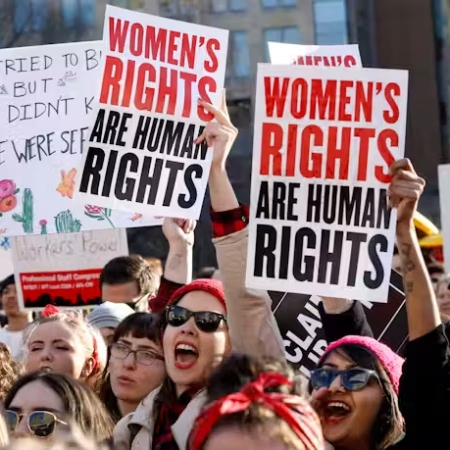
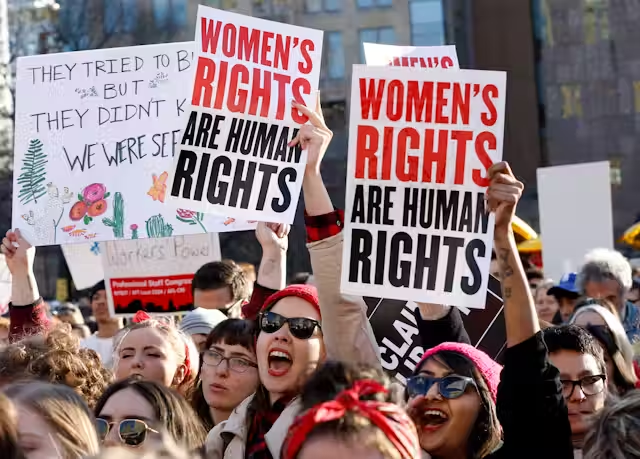
By AVA FAHY
The Trump administration has launched a full-frontal assault against all oppressed and exploited sectors of the population, and women are no exception. This International Women’s Day, Workers’ Voice takes stock of the women’s movement almost three years onwards from Dobbs v. Jackson Women’s Health Center.
Since the catastrophic Supreme Court decision that overturned Roe v. Wade and Planned Parenthood v. Casey, the impact of abortion bans on reproductive health in the U.S. has been dire, particularly for Black pregnant people who are more than three times as likely to die from a pregnancy-related cause than white people.
Most states that have implemented abortion bans or severe restrictions have not also tracked the correlated factor of maternal mortality. Independent reporting reveals the violent, terrible impact of abortion bans. In Texas, which punishes abortion providers with up to 99 years in prison, the rate of sepsis spiked more than 50% for women hospitalized with pregnancy loss in their second trimester.
Sepsis is a life-threatening condition, and indeed, Texas women like Josseli Barnica and Neveah Crain died of sepsis that could have been prevented had doctors not delayed performing an abortion until their fetuses ceased their heartbeats. Candi Miller and Amber Thurman of Georgia, and an unknown amount more in states with abortion bans or restrictions, died in the same way. Porsha Nguzemi of Texas similarly died of hemorrhaging when doctors delayed lifesaving abortion care.
Trump and Musk’s Project 2025 seeks to ban and criminalize medication abortion, the most common form of abortion, and often the only form of abortion care available to rural patients and people in abortion deserts—which have become all the more common post-Dobbs. The attack is two-pronged: First, they have launched a lawsuit seeking to reverse the FDA approval of mifepristone, a major abortion pill. Second, they seek to expand and enforce the Comstock Act, an 1873(!) federal law that criminalizes mailing information on reproductive care. Under Project 2025, the proposal is to criminalize anyone who sends or receives not only abortion pills, but potentially anything used for abortion, up to and including speculums and analgesics. This could amount to a nationwide ban on abortion—which experts estimate would increase maternal mortality by 24% nationally and by 39% for Black people.
Project 2025 also seeks to expand surveillance of pregnant people, and a number of Republican legislators have introduced proposals for registries of pregnant people to be monitored and prosecuted if they obtain abortions. Similar surveillance of pregnant people already takes place, primarily among people with a history of incarceration or substance use, and it leads to traumatizing and deeply unethical criminal charges for behavior while pregnant. This kind of surveillance sends a clear message to women and pregnant people: you have no autonomy while pregnant.
What do we do? One vital solution is to fight back through the labor movement. Union struggles are a mechanism by which working women can win vital freedoms. Unions can fight for health benefits and can even wage struggles for reproductive justice by winning protections for workers seeking abortions or other reproductive care. And the unions can link up with and help to organize demonstrations in the streets for reproductive rights and in defense of health clinics.
Black and Asian women led the gains in union membership growth in the U.S. over 2024. They were the only demographics to see an increase in union numbers, with every other demographic decreasing. Growing efforts to unionize retail, caregiving, and hospitality sectors may be behind this growth, as these sectors are traditionally dominated by women.
Unionized working women earn more money—on average, about 19% more than their non-union counterparts, and they are far more likely to have health insurance coverage. These benefits and wage improvements are particularly beneficial for working women of color, who face particularly harsh discrimination at the intersection of class exploitation, racial oppression, and gender oppression.
Successful contract fights for paid family leave and paid sick time disproportionately benefit women, who are more likely to be responsible for childcare and elder care. Retirement benefits, too, benefit women workers, who tend to earn less than men over their lifetimes, despite their longer lifespans.
As important as these labor wins are—and make no mistake, they can be the difference between life or death—the liberation of women and the end of gender oppression will not be won on a union-by-union basis. It will certainly not be won by the efforts of the Democratic Party, under whose watch Roe was overturned with little more than a shrug from the Democratic president or Congress. It will not be won by NGOs like Planned Parenthood or the Guttmacher Institute, who are beholden to their wealthy ruling-class donors, dependent on government grants, and are thus incapable of engaging in the class struggle because of their allegiances. It will be won by creating a class-struggle left wing in the union movement, with a pointed focus on developing the leadership of women and Queer people. It will also require a mass movement in the streets, independent from the Democrats and the Republicans and ruled by the needs and methods of working-class women and Queer people fighting for their rights.
On March 8, millions of women will take the streets worldwide to protest for women’s rights. In individual cities, hundreds of thousands will chant and march together to bring an end to gender oppression. This is unlikely to happen in the United States for the same reason that May Day is seldom commemorated—lingering Cold War attitudes toward International Women’s Day’s socialist origins.
International Women’s Day burst forth proudly from an international movement of socialist working women. Luise Zietz and Clara Zetkin proposed at the 1910 International Conference of Socialist Women that they must organize a special Women’s Day to promote not only women’s suffrage but labor rights for working women and democratic rights for women and children. On March 8, 1917, women textile workers in Petrograd organized a Women’s Day demonstration that swallowed the entire city, developed into a general strike, and, with the strength that they demonstrated in the streets, marked the beginning of the February Revolution. The Tsar abdicated only a week later.
In the United States, International Women’s Day often passes without much notice. But there is no reason why it should be ignored, especially since women’s rights and reproductive rights are under such harsh attacks. The assault on women’s rights by Project 2025, and by Trump, Vance, and their flunky Musk—alongside the hard-won rights of all oppressed people and the working-class—necessitates a serious movement of working women to organize beyond electoral politics and take matters into their own hands.
This March 8, U.S. women and their allies should seek out a March 8 event—they do exist, even if their sizes are usually humble—and attend. If one isn’t available, they should look to the movements of women internationally as examples of strong women’s movements carrying their struggle into the streets. Women’s movements in Ireland, Argentina, Mexico, Colombia, and more have recently successfully won abortion rights after years of restrictions.
The only real solution to the end of women’s oppression is an end to the sexist, patriarchal capitalist system. The end of that system will only be won by building a huge movement of working people in the streets, communities, and workplaces, organized by an independent revolutionary socialist party that includes the mass participation of working women.
-
Oscar winner ‘No Other Land’ shows true face of Israeli violence in West Bank


By JAMES MARKIN
The winner for best documentary at last weekend’s Academy Awards is a movie that most Americans aren’t able to easily watch: “No Other Land.” The Palestinian/Israeli documentary failed to find a U.S. distributor ahead of the prestigious Oscar ceremony despite being the favorite to win an award. This is not due to a lack of demand; “No Other Land” actually outpaced all of its Best Documentary rivals in box office sales through independent distributors. Instead, the lack of a distributor is just another example of how corporate America has worked to silence Palestinian narratives in the public discourse, even as the U.S. government channels billions of dollars into the Israeli genocide in Gaza.
Blend of documentary journalism with activism
“No Other Land” is a unique film, a fly on the wall documentary that tells the story of the fight by Palestinians to save the rural West Bank community of Masafer Yatta from destruction by the IDF. Since the 1980s, Israel has been seeking to depopulate the area, claiming that it is needed for an IDF training zone.
This project was upheld by the Israeli Supreme Court after Palestinian families sued in the 1990s. Leaked Israeli government documents from the 1980s, however, revealed that since the beginning the IDF training zone was always an excuse used to justify Israel’s real goal of depopulating the region as part of a broader plan to expedite Israeli settlement in the area. As part of this effort, Israeli bulldozers are dispatched regularly to far-flung parts of Masafer Yatta to demolish homes, playgrounds, schools, and businesses of Palestinians, as the IDF hopes this will force them to leave their homes and farms.
The film’s co-director, the young Palestinian activist Basel Adra, is inextricably linked to the fight to defend Masafer Yatta. Old footage shows Basel’s father, Nasser, leading the struggle against the Israeli demolitions in the 1980s and 1990s. Now Basel himself has had to take up a serious degree of leadership in the fight. Despite going to school to be a lawyer, there is not enough legal work in the West Bank for Basel to make a living practicing law. So instead, Basel divides his time between helping out with his father’s rural gas station and documenting and leading protests against Israeli demolitions of homes and businesses in Masafer Yatta.
The documentary shows clearly how much his dedication to the struggle has taken a toll on Basel Adra, who tries to defuse the stress of fighting for the life of his community through heavy smoking and a near compulsive use of his phone. This is in contrast to the Israeli co-director of the film, Yuval Abraham, an Israeli who had his life changed when he learned Arabic and came to the realization that his country’s treatment of Palestinians is unconscionable. In the film, Yuval often is a used as a more somewhat-naïve, energetic and impatient foil to the dogged and often exhausted Basel. Sections of the film are dedicated to fly on the wall segments of the two men having conversations, in hookah bars, cars and around Basel’s home, where they often spend nights sprawled out next to each other in sleeping bags on the bare floor.
While Yuval’s dedication to stopping the Israeli destruction of Masafer Yatta is not questioned, some of the more interesting parts of the film interrogate his role and presence in the Palestinian community. While Basel lives in the rural West Bank and cannot leave, or even drive on roads built for Israeli settlers, Yuval has made the choice to spend much of his time there producing the documentary and writing about the situation that Basel’s community is facing. Even so, he is often able to return home to his family, almost in another reality back within Israel.
During one particularly striking moment in the documentary, as Yuval is helping out with the work of carrying heavy equipment in Masafer Yatta, he is confronted by a resident who asks how Abraham can expect to be close with Palestinians in the West Bank when “the people who are demolishing our homes could be your cousins.” Their contentious conversation is then interrupted by another resident, who calls them over to help out elsewhere, declaring that there will be time for debate when the work is done.
Home demolitions: despair punctuated by ruthless violence
Indeed, the documentary demonstrates that time is often something that the residents of Masafer Yatta lack, and much of the film is dedicated to cell phone footage shot by Basel and Yuval that documents the continued Israeli demolitions in the rural community. At one point during the film, we see one of the men who was earlier helping out and debating with Yuval, Harun Abu Aram, shot at very close range by an IDF soldier during a scuffle at a home demolition. The shooting leaves Harun paralyzed from the neck down. For the rest of the movie we are shown Harun’s mother, forced to take care of her now paralyzed son while living in a cave because their home was demolished. Harun Abu Aram died in 2023 due to bedsores and infections caused by lying on the floor of a cave, unable to move.
This is one of the most striking things about “No Other Land”—the way that it conveys the day-to-day horror of life under brutal military occupation. One day a man is in the prime of his life providing for his family and is a pillar of the community, the next day he is lying on the floor of a cave, slowly dying as his mother takes care of him and his family. “No Other Land” shows us the whole story in its most brutal detail.
We also are shown how the decades-long struggle has impacted Basel and his family, transforming their day-to-day life such that the extraordinary harassment of the IDF is mundane to them. At one point, his mother tells Basel that she has laundered his clothes so that they can be ready if he is arrested. When the soldiers come for him and his father, Basel is able to escape arrest as his family demonstrates that they have dealt with IDF arrest squads many times and have learned techniques to evade them. Basel’s father, however, is not able to escape, and Basel is forced to give up a lot of his activism work in order to take care of the family business.
This leads to a section of the film in which, while Nasser Adra is in prison and Basel is taking care of the gas station, it is Yuval who then takes on the work of confronting and documenting IDF home demolitions. Through the lens of his phone camera, we see how he is received differently by the IDF forces as a Jewish demonstrator. At one point, an angry Jewish man in civilian clothes gets in his face and promises retribution to his family for being a traitor.
Indeed, toward the end of the film, the Jewish settlers become a bigger and bigger menace to the community in Masafer Yatta. They often show up to confrontations armed and determined to cause havoc for the Palestinian community. Through Basel and Yuval’s footage we see how settler attacks are shadowed by IDF troops who do nothing to prevent the attacks, as they are there merely to discourage retaliation. The film ends with a particularly blood-curdling scene of Jewish settlers, armed with rifles, attacking the very cluster of homes where the Adra family lives.
This lack of closure in the end of the movie is a powerful call to action for those watching it. Throughout the film, the two directors discuss and debate just how much documentation and journalism can help to end the kind of vicious military and settler violence that faces Masafer Yatta. While exactly how the directors would ultimately answer this question is unclear from the film alone, from an activist perspective it does seem apparent that a film like “No Other Land” itself can do very little to change the reality on the ground. It is up to us, the viewers, who are among the working classes of countries like the United States to stop our imperialist government’s support for what Israel is doing.
At one point, Basel even directly alludes to the possibility of a potential withdrawal of U.S. support being a turning point in the struggle of Masafer Yatta. That is why, while activists should go to see “No Other Land” at whatever independent theater is showing it near them, the more important thing is to build a large and militant Palestine-solidarity movement that is capable of materially helping the people of Masafer Yatta.
-
Trump engineers a stunning shift in U.S. foreign policy


By ERNIE GOTTA
The Trump administration has stunned the world with a radical shift in foreign policy. One of the crudest expressions of the new policy took place on Feb. 28 when, at an explosive meeting at the White House, President Trump and Vice President Vance teamed up to humiliate Ukrainian leader Vladimir Zelensky for being “disrespectful” to the U.S. Their claims included the charge that Zelensky had not expressed sufficient thanks for past aid shipments. The session had been called in the context of an impending “deal” (steal) in which the U.S. would be given the right to extract key mineral resources from Ukraine. At the end of the meeting, however, Trump brusquely declared to Zelensky, “you either make a deal or we’re out!” Zelensky was then asked to leave the White House.
The meeting followed several other shocking statements by U.S. officials in the early weeks of the Trump administration. As a whole, they were read by many commentators as an expression of the destruction of the post-World War II global order in favor of a new configuration thought to be more beneficial to U.S. imperialism. What are the elements of this shift? What do they mean for the major capitalist nations in crisis? What will they mean for working people in the U.S. and elsewhere?
Elements of the U.S. change in policy
On Feb. 24, the U.S. refused to vote for a UN resolution condemning Russia on the third anniversary of that country’s invasion of Ukraine. The vote followed three shocking speeches from the Trump administration:
Secretary of Defense Pete Hegseth, in a Feb. 12 meeting in Brussels with the Ukraine Defense Contact Group, an alliance of some 57 countries, made it clear that the U.S. was prioritizing containing China—and not Russia. He said, “We will only end this devastating war—and establish a durable peace—by coupling allied strength with a realistic assessment of the battlefield. We want, like you, a sovereign and prosperous Ukraine. But we must start by recognizing that returning to Ukraine’s pre-2014 borders is an unrealistic objective.”
Hegseth laid out U.S. priorities, stating, “The United States faces consequential threats to our homeland. We must—and we are—focusing on security of our own borders. We also face a peer competitor in the Communist Chinese with the capability and intent to threaten our homeland and core national interests in the Indo-Pacific. The U.S. is prioritizing deterring war with China in the Pacific, recognizing the reality of scarcity, and making the resourcing tradeoffs to ensure deterrence does not fail.”
Two days later, at the Munich Security Conference, JD Vance elaborated on the attitude of the Trump administration toward much of Europe. In front of European capitalist politicians and military officials, he mocked the European liberal “democracies” by saying that the greatest threat was not external but rather internal. Vance compared European “firewalls” against electoral collaboration with parties originating in fascism to the censorship of free speech. He compared the UK arrest of an anti-abortion protester who had violated the safety zone of a clinic to Stalinist repression of dissidents, and he painted a picture of liberal repression against Christians and people who hold far-right political beliefs and belong to far-right political organizations.
Vance reached out to European rightists by celebrating the “shared values and civilization of Europe and the U.S.”—a dog whistle to the proponents of white supremacy, anti-communism, and a reactionary traditionalism. He also went out of his way to meet with Alice Weidel, leader of the far-right German AfD, which made significant gains in the German elections. Vance and Weidel discussed the Ukraine war, German domestic policy, and freedom of speech.
The new reality of the reconfiguration of alliances was overwhelming for some European politicians. At the closing of the Munich Security Conference, the chairman, Christopher Heusgen, a German diplomat, teared up as he stated, “It is clear that our rules-based international order is under pressure. … It is my strong belief… that this multipolar world needs to be based on a single set of norms and principles, on the UN Charter and the Universal Declaration of Human Rights. This order is easy to disrupt, it’s easy to destroy, but it’s much harder to rebuild, so let us stick to these values. Let us not reinvent them, but focus on strengthening their consistent application.”
Days later, on Feb. 18, Secretary of State Marco Rubio had a meeting in Riyadh, Saudi Arabia, with his Russian counterpart, Sergey Lavrov, to discuss reestablishing diplomatic relations in order to work out a peace deal in the war with Ukraine. Ukraine was left out of the meeting, and President Trump went so far as to say that Ukrainian President Zelensky was a “dictator without elections.”
Lavrov told Rubio that Russia would unlock opportunities for U.S. investment and access to minerals. They agreed to establish ways to consult on addressing grievances and reopen diplomatic missions. Based on a presumed agreement to allow Russia to continue to occupy rich Ukrainian territory, they spoke of future cooperation on issues of national interest and “historic” investment opportunities.
Capitalist nations in crisis
This is a dramatic shift from the previous year when the U.S. under the Biden administration gave Ukraine enough military support to keep their defense alive. This was in line with a strategic alliance with a Europe fearful of Russian encroachment in other border areas. Now, Washington sees its future better served by playing ball with Russia.
The U.S. expectation in these shifts is that Europe will begin to expand war budgets and defense expenses. How will the EU countries who have relied on U.S. aid for decades pay to defend Europe? One way is to ease up on laws that limit spending. Another way would be to slash social programs to fund defense expenses. Programs in Europe like universal health care and family subsidies that have been the envy of working people in the U.S. will be on the chopping block.
The EU nations will also drastically cut aid to the developing world, mirroring the U.S. dissolution of USAID. The fear among European capitalists is that slashing welfare in favor of weapons would unleash worker and youth protests and strikes across the continent like we saw in Britain and France in 2023.
Another aspect of this political turn is that the U.S. capitalist class recognizes the rise of Russia and China as new imperialist powers. This means that resources and markets around the globe must be redivided. Who will have the upper hand? Clearly, China remains the main economic and military competitor of the U.S. The question is how U.S. imperialism can contain China and maintain profitability.
This historic switch is tied to a new U.S. strategy for competing with China while in a period of economic decline. This decline pushed Biden to withdraw troops from Afghanistan in order to bolster a military presence in the Pacific.
Today a section of U.S. capitalists is taking a different approach, which looks similar to the Project 2025 playbook put together by the Heritage Foundation. Regarding U.S. foreign policy, Project 2025 tries to analyze the costs versus the benefits to the United States. The intention is to eliminate “wasteful spending,” which would weaken international and national organizations like NATO, the World Health Organization, and USAID. Of course, NATO and USAID were extensions of U.S. imperialism that utilized hard and soft power to project and protect U.S. interests.
Why does Trump consider this wasteful spending? We know that the U.S. is far behind in the ability to produce enough military equipment for war. Part of Trump’s rise to power is directly related to his ability to put the U.S. on a war footing to contain China. The need for a new military build-up and serious shifts in the Department of Defense are also outlined in Project 2025. This includes strategies around irregular warfare, necessary types of weapons procurements, whom the U.S. should ally with, and much more.
In May 2024, Roger Wicker, a senator from Mississippi, said, “It is far past time to rebuild America’s military. We can avoid war by preparing for it. When America’s senior military leaders testify before my colleagues and me on the U.S. Senate Armed Services Committee behind closed doors, they have said that we face some of the most dangerous global threat environments since World War II. Then, they darken that already unsettling picture by explaining that our armed forces are at risk of being under-equipped and outgunned. We struggle to build and maintain ships, our fighter jet fleet is dangerously small, and our military infrastructure is outdated. Meanwhile, America’s adversaries are growing their militaries and getting more aggressive.”
The people who will benefit from these shifts are far-right tech billionaires like Peter Thiel and Elon Musk, who will get billions in government contracts. These billionaires consider themselves the “counter-elite” and want to destroy what they see as the “globalist” order. Musk is openly intervening in the government. With one hand, he is slashing programs and departments, and on the other hand, he is accepting billions of dollars in government subsidies for SpaceX. Fortune.com writes, “SpaceX CEO Gwynne Shotwell has said that the company has $22 billion in government contracts, Reuters reported. EV company Tesla, whose stock makes up the bulk of Musk’s nearly $400 billion net worth, has benefited from $2.8 billion in tax subsidies or grants, according to subsidy tracker Good Jobs First.”
What does this mean for the working class?
Trump’s “America First” declarations signal a concentrated effort by the United States to reassert itself as the preeminent superpower in the world—above any rivals such as China. As steps are being taken to increase funding for a modernized high-tech U.S. military force, the president has made it clear that Washington intends to threaten and bully other governments to get its way. The administration has shown that it is willing to pose as a “peacemaker” when that tactic seems useful, but that it will unleash its military power if necessary.
Workers have no stake either in the current economic conflicts or in the looming war of military destruction. If the U.S. were to go onto a full war footing, we could see drastic domestic changes as well—the reinstitution of a draft, a clampdown on dissent, efforts to regiment labor and outlaw strikes, and the continued gutting of social programs and regulations affecting corporate production.
Some sectors of corporate America believe that Trump’s policies will help their bottom line on the world stage. But ultimately, the capitalists have few means to increase their profits other than ramping up their exploitation of the working class. In order to fight back, working people and their allies can only depend on themselves. Democratic Party politicians claim to provide leadership, but have no real answers. We need to organize in our workplaces and unions, schools, and communities in order to mobilize millions of people in the streets in a powerful and united response to the Trump agenda.
Money for housing, health, and climate mitigation—not for the Pentagon! Self-determination for Palestine and Ukraine!
Photo: Trump berates Zelensky at a White House meeting on Feb. 28.
-
Immigrants and their allies mobilize against Trump’s attacks

{:en}

By JOSE MONTEROJO
Immigrants and their allies are responding to the Trump administration’s attacks on their community with organizing and mobilizations across the country. From California to the East Coast, immigrant organizations and communities are marching in the streets, holding legal training to prepare immigrants for ICE raids, and preparing networks to defend immigrants from deportation.
We are witnessing a revival of a political tradition of immigrant rights organizing that has deep roots among the U.S. working class. This fledgling movement carries the potential to become a mass movement of millions to not only fight the current regimes racist policies, but also to unite with all sectors of workers and social movements to shake the foundation of the government and the imperialist system it defends.
The immigrant rights struggle has generated significant protests in areas as far and wide as Los Angeles, Minneapolis, Chicago, and New York City. While not yet a movement of millions, these protests do demonstrate a willingness among a sector of the immigrant rights movement to openly defy the government’s actions.
On and around Feb. 1-3, people in many cities observed a series of pro-immigrant boycotts and demonstrations—precursors and building actions for this year’s “A Day Without Immigrants” activities that are planned nationwide for May 1-5. In Los Angeles, approximately 3000 protesters took to the streets over the course of three days. Students walked out of classes, protesters marched to central Los Angeles and took over a freeway. Latin American flags, in particular the Mexican flag, waved in the wind, as activists called for an end to deportations and a recognition of immigrants’ humanity.
In early February, thousands of protesters mobilized in front of the Colorado State Capitol. They were responding to ICE raids in Denver and Aurora as part of Trump’s “Operation Aurora,” meant to sweep up supposed members of the Venezuelan gang El Tren de Aragua. That same week, approximately 1500 people attended a legal training held by pro-immigrant lawyers on how to respond to ICE raids in their communities.
In Chicago, immigrants and their supporters sprung into action to counter a series of raids in late January. The round-up of immigrants, dubbed “Operation Safeguard,” involved a number of U.S. agencies besides ICE, and was overseen by top Trump officials. Activists leafleted the community and held a number of training sessions in order to inform immigrants of their rights, while taking other steps to hinder federal agents from completing their quotas.
These were a few of the major examples of pro-immigrant mobilizations across the United States. Most protests are small, gathering dozens to hundreds of protesters. The current climate of fear within the immigrant community is undoubtedly contributing to smaller protests, but this may change as immigrants see non-immigrant and non-undocumented workers speaking out against anti-immigrant racism and helping to build political spaces where undocumented workers can mobilize in an environment of collective solidarity and safety.
As in the Palestine solidarity movement in the U.S., youth are playing a leading role in fighting deportations. In the nationwide “Day Without an Immigrant” protest held on Feb. 3, thousands of immigrant youth stayed home from school and took to the streets. In Houston, about a quarter of its student population stayed home. In San Jose, hundreds of students from Latino immigrant neighborhoods staged walkouts on Jan. 30. In Oklahoma, hundreds of students, educators, and community members mobilized against the local Board of Education against policies meant to inquire about students’ and families’ immigration statuses.
These protests do not yet have a clear leadership or structure. Non-profit groups, legal advocates, left-wing organizations, and social media posts are contributing to the mobilizations. While the various activists in the spaces are demonstrating initiative in kickstarting an immigrant rights movement, a national campaign against nationwide attacks on immigrants will require local, regional, and national frameworks to effectively resist the Trump regime.
Such frameworks can take the form of immigrant rights coalitions, uniting all the various pro-immigrant organizations into one powerful struggle around key demands such as “end the deportations,” “close the detention centers,”“free immigrant detainees,” and “citizenship for all.”
One example we can learn from is Papeles para Todos (Papers for All), an immigrant rights coalition based in San Jose, Calif. Most recently, in February, this coalition, along with other immigrant organizations, participated in a protest in San Jose to denounce ICE raids. In addition to this, Papeles Para Todos built a solidarity campaign with immigrant detainees on strike at two ICE detention centers in Southern California. This campaign held virtual meetings with detainees, organized fundraisers, and protests in solidarity with their strike. Papeles Para Todos unified local left-wing, non-profit, and legal aid organizations into one unified coalition.
Such a coalition, on a much larger scale, organized the 2006 “A Day Without Immigrants” mobilization. Student organizations such as the Movimiento Estudiantil Chicano de Aztlán (MEChA), human rights organizations like the Coalition for Humane Immigrant Rights of LA (CHIRLA), and labor unions such as the Service International Employees Union (SEIU) and American Federation of State, County, and Municipal Employees (AFSCME) collaborated to organize a nationwide mass protest to push back against H.R. 4437, a policy aimed at making living without legal documents in the U.S. a felony and to lengthen the border wall.
There are currently two lawsuits underway on behalf of pro-immigrant legal groups aimed at blocking Trump’s orders to remove Temporary Protected Status (TPS) from hundreds of thousands of refugees from devastated areas such as Haiti, Venezuela, and Nicaragua. While the blocking of these policies is welcome, we must place our faith in our ability to organize in the workplaces and in the streets. Lawsuits are slow, grinding processes that channel our energy toward the courts—where the bosses hold power and write the rules—and away from where we live and work, which is where we can organize the mass actions to beat back the Trump regime’s reactionary attack.
Various labor unions across the United States released statements critical of the right-wing attacks by the new government. The AFL-CIO’s response criticized Trump’s deportation orders. It will be up to union activists across the U.S. to argue for a pro-immigrant campaign in coalition with other immigrant rights organizations, which are now promoting May 1 rallies.
Photo: Hundreds march in Santa Rosa, Calif., on the national Day Without Immigrants, Feb. 3. (John Burgess / The Press Democrat)


